
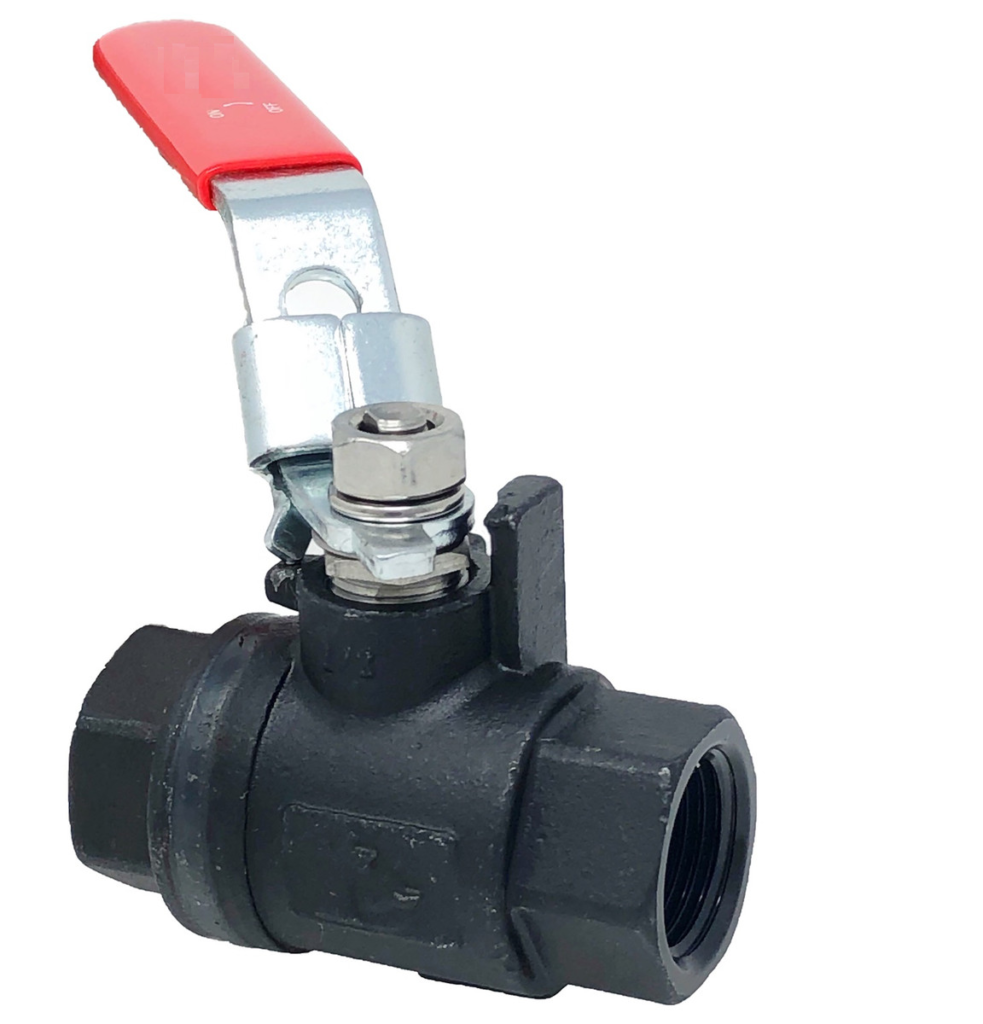
LC-292T-F – Fire Safe Two piece Full port Carbon Steel Ball valve
LC-292T Series
FIRE SAFE 2- PIECE CARBON STEEL BALL VALVE
- – ¼” TO 2”: 2000 W.O.G
– Strengthened construction secures 2000 psi working pressure rating. Reinforced TFE seats increase durability.
– Adjustable packing gland.
– Bottom-loaded blow-out proof stem.
– Basic design complied with ANSI B16.34 & EN 12516-1.
– NPT threaded ends complied with ANSI B 1.20.1..
– Re, Rp & G Threaded ends complied with BS 21/2779, JIS B- 0203/0202, DIN 259/2999, ISO 228-1, ASl 722.1/1722.2 are upon request.
– Graphite gasket & stem packing prevent post-fire external leakage.
– Post-fire metal to metal seal prevents internal leakage after fire.
– Tested according to API 598
Additional information
| Weight | N/A |
|---|---|
| Size | LC-292T025 ¼ʺ, LC-292T038 ⅜ʺ, LC-292T050 ½ʺ, LC-292T075 ¾ʺ, LC-292T100 1ʺ, LC-292T125 1¼ʺ, LC-292T150 1½ʺ, LC-292T200 2ʺ, LC-292T250 2½ʺ, LC-292T300 3ʺ, LC-292T400 4" |
When to choose the LC-292T-F Fire-Safe Ball Valve
This valve is the right choice when:
- Your application handles flammable fluids or gases – hydrocarbons, fuels, solvents, natural gas.
- Project specs or insurance require fire-safe certification. Common in refineries, petrochemical, and fuel storage projects.
- You need carbon steel construction for hydrocarbon service.
- You want full-port flow for minimal pressure drop in process lines.
- The downstream line could become a fire feed if the upstream valve loses its seal during a fire event.
Comparison: Fire-Safe vs Standard Ball Valve vs Gate Valve
| Property | Standard ball valve (PTFE seats) | LC-292T-F Fire-Safe | Gate valve |
|---|---|---|---|
| Holds seal in a fire | No (PTFE melts) | Yes (metal backup) | Often, but slower closure |
| Speed of closure | Fast (quarter turn) | Fast (quarter turn) | Slow (multiple turns) |
| Certified fire-safe (API 607) | No | Yes | Some, varies |
| Suitable for hydrocarbons | Yes | Yes (designed for it) | Yes |
| Pressure drop (full port) | Low | Low (full port) | Lower |
For any flammable service where regulations or insurance specs require fire-safe construction, the LC-292T-F is purpose-built for the application. Contact Lance Valves for project-specific certification packages.
Frequently Asked Questions – LC-292T-F Fire-Safe Ball Valve
Q: What does Fire-Safe mean for a ball valve?
A: A Fire-Safe ball valve is designed to maintain a seal even after the soft (PTFE) seats burn away in a fire. When the PTFE seats melt, secondary metal-to-metal contact points engage and continue to seal the valve closed – preventing the line from feeding the fire with flammable contents. Without fire-safe construction, a standard ball valve in a fire would lose its seal entirely as the PTFE melts.
Q: When is fire-safe certification required?
A: Fire-safe valves are typically required (or strongly recommended) for: oil and gas processing, refineries, petrochemical plants, chemical facilities handling flammable liquids or gases, fuel depots and storage facilities, and any process line where a downstream fire could be fed by what’s upstream of the valve. Insurance companies and OSHA regulations often drive fire-safe specification.
Q: What certifications does the LC-292T-F have?
A: The LC-292T-F is designed and tested to common fire-safe standards (API 607 / API 6FA / ISO 10497 family). For project-specific certification documentation, contact us with the spec your project requires.
Q: Is fire-safe the same as fireproof?
A: No. A fire-safe valve will continue to seal during and after a fire – it doesn’t prevent the fire or stop the valve body from being damaged. The point is to contain the line so the valve doesn’t become a leak source feeding the fire. After a fire event, fire-safe valves should be inspected and typically replaced.
Q: Why carbon steel instead of stainless?
A: Carbon steel is the most common material specification for petrochemical, refinery, and oil/gas service – where fire-safe is most often required. It handles hydrocarbon service well, has excellent strength at the relevant temperatures, and is more economical than stainless. If your application needs stainless fire-safe, ask us about alternative configurations.